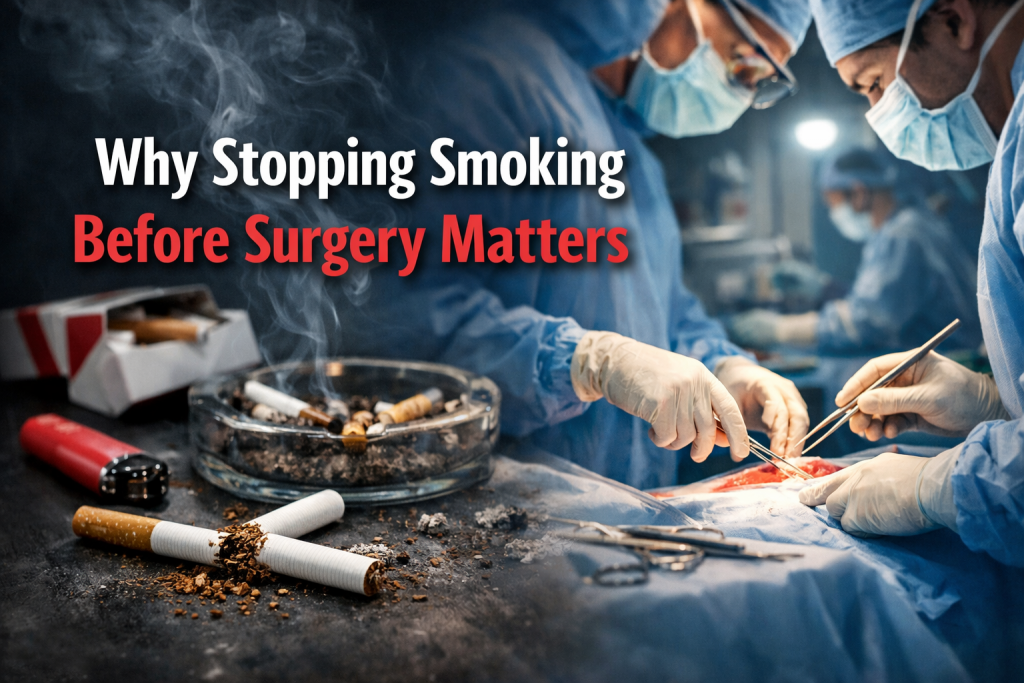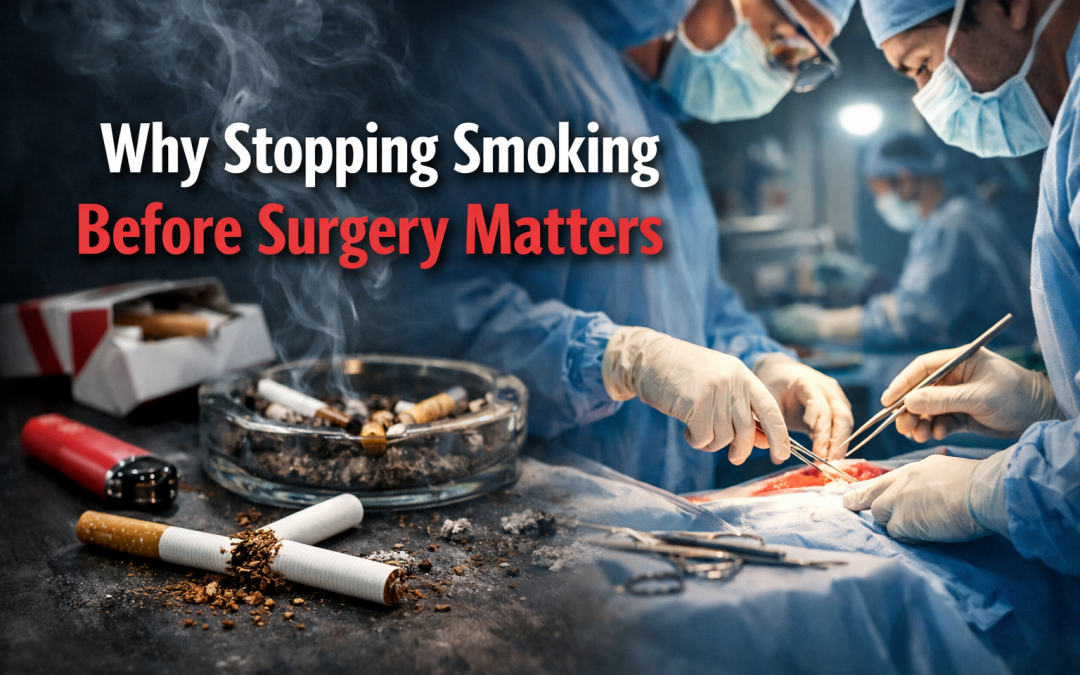
Preparing for surgery involves more than choosing a date and planning your recovery. One of the most important steps you can take to support your healing is stopping smoking – including cigarettes, vapes, and all nicotine‑containing products. While every surgeon has their own specific requirements, most may recommend stopping at least four weeks before surgery, and ideally much longer. The same guidance applies after your procedure too.
Smoking affects the body in ways that can significantly impact your surgical outcome. Understanding why this matters can help you make informed decisions and give yourself the best chance of a smooth, safe recovery.
How Smoking Affects Your Body During Surgery
Nicotine and the chemicals found in cigarettes and vaping products can interfere with several key processes your body relies on to heal. These effects include:
Reduced blood flow – Nicotine causes blood vessels to narrow, limiting the oxygen and nutrients that reach your tissues. This slows healing and increases the risk of complications.
Higher risk of wound problems – Smokers are more likely to experience delayed wound healing, wound breakdown, or infections.
Increased risk of complications – Issues such as skin loss, poor scarring, and necrosis are more common in people who smoke.
Impact on anaesthesia – Smoking can affect lung function, making anaesthesia and recovery from it more challenging.
These risks apply whether you smoke traditional cigarettes, vape, or use nicotine replacement products. Even “light” or occasional smoking can have an impact.
Why Surgeons Ask for a Minimum Stop Period
Most surgeons may recommend stopping smoking at least four weeks before surgery, though many prefer longer. This timeframe gives your body a chance to:
Improve circulation
Increase oxygen levels
Strengthen the immune system
Reduce inflammation
Begin repairing the effects of nicotine
Stopping earlier than four weeks – even eight to twelve weeks – can offer even greater benefits and reduce the likelihood of complications.
Why Staying Smoke‑Free After Surgery Is Just as Important
The healing process doesn’t end once you leave the operating theatre. Your body continues repairing tissues for weeks and months after surgery. Continuing to smoke during this time can:
Slow down wound healing
Increase the risk of infection
Affect the quality of your scars
Increase the chance of needing revision surgery
Remaining smoke‑free for at least four weeks after surgery is strongly advised, though longer is always better for your long‑term results.
What Counts as “Smoking” or “Nicotine Use”?
Many people assume vaping or nicotine replacement products are safer around surgery, but they still contain nicotine, which affects blood flow and healing. Surgeons typically include the following under “no nicotine” guidance:
Cigarettes
Vapes and e‑cigarettes
Nicotine pouches
Nicotine gum or patches
Shisha
Cigars
If you’re unsure whether something is safe, your surgical team can advise you.
How to Prepare for Surgery if You Smoke
Stopping smoking can be challenging, but support is available. Many people find it easier when they:
Set a clear quit date
Use non‑nicotine stop‑smoking aids (if approved by their GP)
Seek support from NHS stop‑smoking services
Tell friends and family so they can help
Remove triggers such as lighters or ashtrays
Your surgical team may also ask for a nicotine test before your procedure (or on the day of surgery) to ensure your body is in the best possible condition for healing.
Giving Yourself the Best Chance of a Smooth Recovery
Stopping smoking before and after surgery is one of the most effective ways to protect your health, reduce complications, and support the best possible outcome. While each surgeon may have slightly different requirements, the message is consistent: the longer you stay smoke‑free, the better your healing and results are likely to be.